
STORIES OF CHANGE: In Conversation with Anetta Barnes-Mangxaba
REPUBLISHED FROM: STORIES OF CHANGE: Powerful stories of women who are shaping the future of media and business
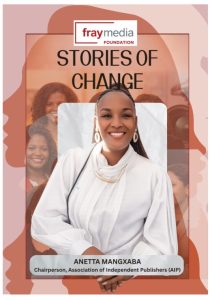
For the leader behind Dizindaba Media, media has always been about more than reporting the news. It has been about visibility, dignity, representation, and creating platforms where communities can see themselves reflected in their own language and lived realities.
Building community media that serves, represents and empowers, Anetta Barnes-Mangxaba, brings us to her journey into media and journalism. The Chairperson of the Association of Independent Publishers (AIP), says her journey was shaped by what she witnessed in underserved and rural communities, particularly among isiXhosa-speaking communities whose stories were often overlooked or misrepresented. This motivated her drive “to create platforms that speak directly to our people in their own language and context”. To the creation of Dizindaba Media, she says:
“Our purpose became not only to inform, but also to empower, educate and preserve identity”.
According to the Chairperson, stories of resilience, culture, women, youth, faith, education, community leadership, and local development were not receiving the visibility they deserved in mainstream spaces.
Over time, the purpose of Dizindaba Media expanded beyond traditional journalism into building sustainable media businesses and digital storytelling platforms. Currently, the platform is growing in the aims of focusing on youth development opportunities, podcasts, and partnerships that can create real social and economic impact.
“Today, I see media not just as a tool for reporting, but as a vehicle for transformation, skills development, healing, representation, and nation building” says Mangxaba.
Overcoming obstacles in community media
Like many independent and community media organisations, the journey has not been without challenges. Mangxaba notes that building and sustaining independent media in rural and township communities often means operating with limited resources, funding, and infrastructure while still carrying the responsibility of serving communities effectively.
In this position, she has had to wear multiple hats at once, as a journalist, editor, strategist, marketer, event organiser, community mobiliser, while upholding the quality and credibility of the publication.
Instead of allowing these obstacles to become barriers and discouragement, Mangxaba says she uses the challenges as motivation to innovate and diversify.
This led to a stronger focus on digital transition strategies, community partnerships, storytelling services, sponsorship proposals, podcasts, events, and multimedia content that could create pathways toward sustainability. Purpose-driven leadership also became central to the work, rooted in the belief that resilience becomes essential when work is connected to service to people.
“These challenges taught me adaptability, faith, creativity, and the importance of building platforms that are not only impactful, but sustainable for future generations”, she says.
Gaining returns in resilience
Among the achievements she is most proud of is helping create visibility and voice for communities often excluded from mainstream conversations. Through community-centred journalism and storytelling, Dizindaba Media has been able to highlight local issues, celebrate grassroots success stories, and promote educational and development initiatives, while amplifying opportunities for women and young people.
Though Mangxaba entered into the media industry unconventionally, without a formal newsroom or traditional media background, she has been able to spear ahead in her aims.
“I had to learn, build and navigate spaces that were often dominated by established structures and gatekeepers”, she explains.
Through resilience, purpose and a commitment to serving communities authentically, she was able to grow from “simply wanting to tell stories into holding influencial leadership positions within the industry”.
Recognising todays growth and success
Today, Mangxaba serves as Chairperson of AIP, one of the largest independent media organisations in South Africa. She also serves as Co-Chair of the Digital News Transformation Fund, the country’s first initiative of its kind, focused on supporting the sustainability and future of independent media.
For her, these leadership roles represent more than personal achievement.
They reflect what is possible for women, particularly black women and women from underserved communities, to lead, influence and shape the future of media in Africa.
Enhancing indigenous languages and youths
Another important aspect of Mangxaba’s work has been creating platforms that embrace indigenous language storytelling and cultural identity through isiXhosa media.
“This has helped communities feel seen, heard, and respected”, she says.
A number of young people in South Africa fall behind due to social and economic limitations, and Mangxaba is driven in the aims of closing this gap.
Looking ahead, she hopes to mentor and inspire young people, especially young women, to believe they can enter media, leadership, and entrepreneurship spaces regardless of their background or qualifications.
“Beyond publishing stories, I believe true impact comes from building confidence, representation, opportunities, and sustainable pathways for others to rise,” says Mangxaba.
Leadership in an ever-changing industry
In a constantly shifting media landscape, Mangxaba’s leadership approach remains grounded in service, vision, and continuous learning. She believes innovation begins with listening, understanding communities and finding meaningful ways to connect storytelling with solutions, development and skills empowerment.
This philosophy has guided her embrace of multimedia storytelling, podcasts, digital media strategies, community engagement, and partnerships that link journalism with social impact.
“Strong leadership is not about individual recognition alone; it is about creating platforms where others can grow, contribute, and discover their purpose,” she says.
Grounded in faith, discipline, and purpose, Mangxaba has found these elements crucial anchors during uncertain seasons, as they continue to guide how she leads and innovates.
Words to the future women leaders
Mangxaba’s advice to young African women entering media and media entrepreneurship is clear:
“Never underestimate the power of your voice, your story, or your perspective. Our communities need authentic storytellers who understand the realities on the ground and who are willing to lead with courage and integrity”.
She encourages young women to continue learning, invest in their skills, and build sustainable models around their passion by understanding business, partnerships, branding, and financial management.
“Don’t wait for permission to start”, she continued. “Use the tools and platforms available to you, continue learning, and invest in building your skills consistently”.
Media today is no longer limited to the traditional newsrooms, says Mangxaba, highlighting the vast opportunities in digital storytelling, podcasting, content creation, publishing, broadcast and social impact communication.
Mangxaba further encourages young women to build sustainable models around their passion.
“Creativity is important, but sustainability matters too” she says.
Adding that learning about business, partnerships, branding, and financial management is important to grow vision and create long-term impact.
Most importantly, she believes in staying rooted in purpose.
“Challenges will come, but when your work is connected to service and impact, you will find the strength to continue.”
Mangxaba first came to know about fraymedia Foundation through the Association of Independent Publishers and its work supporting meaningful storytelling, journalism development, and socially conscious media initiatives across Africa.
What stood out most was the Foundation’s commitment to using storytelling not only as a communication tool, but as a way to drive dialogue, inclusion, accountability, and social change.
“I was particularly inspired by the Foundation’s focus on empowering journalists, creators, and storytellers who are passionate about community impact and underrepresented narratives,” says Mangxaba, adding how strongly aligned these principles are with her own belief that African stories should be told authentically, ethically, and in ways that uplift communities while creating opportunities for future generations.